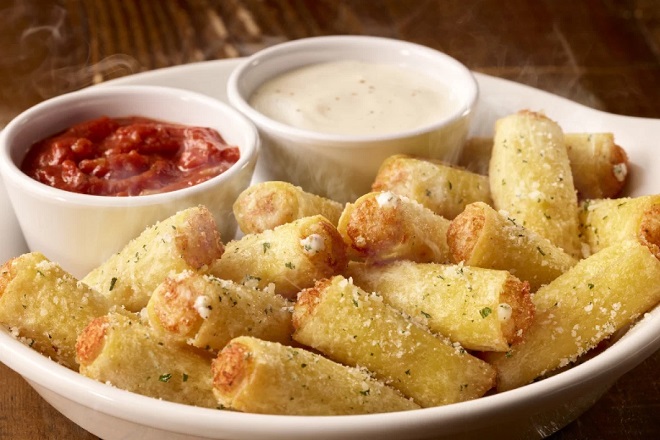
Quick answer: Olive Garden’s Stuffed Ziti Fritta is a deep-fried pasta appetizer filled with a blend of Italian cheeses, breaded in seasoned breadcrumbs, and served with marinara or Alfredo dipping sauce. One order contains 500 calories, 26g of fat, 40g of carbohydrates, and 27g of protein, with 1,040mg of sodium.
You know that moment at Olive Garden when the appetizer arrives and everyone at the table reaches for it at the same time? Stuffed Ziti Fritta has that effect on people. Golden-brown on the outside, gloriously cheesy on the inside — it’s the kind of dish that makes you forget you were planning to save room for dinner.
But if you’ve ever wondered exactly what’s in this thing — the ingredients, the macros, how much sodium you’re actually eating — you’re not alone. A lot of people love this appetizer and want to know what they’re working with. Maybe you’re tracking your intake. Maybe you’re just curious. Either way, this is your full breakdown.
We’re covering everything: what Stuffed Ziti Fritta actually is, what goes into it, the complete nutrition facts straight from Olive Garden’s official data, and how the dipping sauces change the numbers. By the end, you’ll know this dish inside and out.
What Is Stuffed Ziti Fritta, Exactly?
Stuffed Ziti Fritta is one of Olive Garden’s most popular appetizers — and honestly, the name does most of the heavy lifting. “Ziti” refers to the tube-shaped pasta. “Fritta” is Italian for fried. And “stuffed” means exactly what it sounds like.
Each piece of pasta is filled with a rich, creamy blend of Italian cheeses, then coated in seasoned breadcrumbs and deep-fried until the outside is crispy and golden. The result is something like a mozzarella stick crossed with pasta — chewy, melty, crunchy all at once.
The dish is served warm with two dipping sauces on the side: a classic marinara and a creamy Alfredo. The contrast between the sauces is part of what makes the appetizer so fun — tangy and bright versus rich and indulgent.
It’s listed under Olive Garden’s appetizer menu, but let’s be real: a lot of people make it their whole meal and nobody is judging them for it.
What Are the Ingredients in Stuffed Ziti Fritta?
The exact recipe is Olive Garden’s to keep, but based on the dish’s composition and publicly available copycat recipe breakdowns, the core ingredients are pretty well established. Here’s what makes up this cheesy, fried appetizer:
The Pasta
Olive Garden uses tube-shaped pasta — similar to rigatoni or classic ziti — that’s cooked until just al dente before being stuffed. The tube shape is what makes the stuffing possible and gives each piece its satisfying bite.
The Cheese Filling
This is where the dish really shines. The filling is a blend of multiple Italian cheeses, each playing a specific role:
- Ricotta — soft, milky, and light in texture. It forms the base of the filling and keeps things creamy without being too heavy.
- Mascarpone — a rich, buttery Italian cream cheese that adds depth and smoothness to the blend.
- Mozzarella — the classic stretch-and-melt cheese. It’s what gives the filling that satisfying pull when you bite in.
- Parmesan — sharp and nutty, it adds savory contrast to the milder cheeses.
- Asiago — slightly tangy and bold, it rounds out the flavor profile with a little extra complexity.
- Romano — similar to Parmesan but with a slightly more intense, salty bite.
Together, these six cheeses create a filling that’s rich without being one-dimensional. Each one brings something different to the table.
The Breading
The pasta is coated in Italian-seasoned breadcrumbs, which add that signature crunch on the outside. The seasoning in the breadcrumbs — herbs, garlic, salt — gives the exterior flavor of its own, so even the crust isn’t just filler.
The Frying
The pieces are deep-fried in oil until golden brown. This cooking method is what gives the Stuffed Ziti Fritta its distinctive crispy shell and warm, gooey interior. There’s no real substitute for it — baking gets close, but it’s not the same.
The Dipping Sauces
Two sauces come alongside:
- Marinara sauce — a classic tomato-based sauce, tangy and herby
- Alfredo sauce — a creamy, buttery sauce made with Parmesan and heavy cream
Both sauces are counted separately in the nutrition data, which matters quite a bit (more on that below).
Stuffed Ziti Fritta Nutrition Facts
Here’s the official nutrition breakdown for one order of Olive Garden Stuffed Ziti Fritta, as published by Olive Garden:
|
Nutrient |
Amount |
|---|---|
|
Calories |
500 |
|
Calories from Fat |
240 |
|
Total Fat |
26g |
|
Saturated Fat |
11g |
|
Trans Fat |
0g |
|
Cholesterol |
60mg |
|
Sodium |
1,040mg |
|
Total Carbohydrates |
40g |
|
Dietary Fiber |
3g |
|
Sugar |
1g |
|
Protein |
27g |
A few things worth noting here. The protein content — 27g — is genuinely impressive for an appetizer. That’s largely thanks to the six-cheese filling, which is a solid source of dairy protein. The 3g of fiber comes from the pasta itself.
The saturated fat is the number that stands out most. At 11g, that’s 55% of the recommended daily value in a single appetizer. This is expected from a dish with this much cheese and deep frying, but it’s good to know going in.
Sodium is also notable at 1,040mg — roughly 45% of the recommended daily intake — though this is pretty standard for restaurant appetizers with cheese and seasoned breadcrumbs.
The macronutrient split works out to approximately 47% fat, 32% carbs, and 22% protein based on calorie contribution.
How Do the Dipping Sauces Change the Nutrition?
This is where the numbers can shift pretty significantly depending on which sauce you go with. Olive Garden’s official nutrition data lists both sauces as separate add-ons, and the difference between them is stark.
|
Stuffed Ziti Fritta (no sauce) |
With Marinara |
With Alfredo |
|
|---|---|---|---|
|
Calories |
500 |
535 |
720 |
|
Total Fat |
26g |
28g |
48g |
|
Sodium |
1,040mg |
1,360mg |
1,340mg |
|
Total Carbs |
40g |
44g |
43g |
|
Protein |
27g |
27.5g |
31g |
|
Cholesterol |
60mg |
60mg |
130mg |
The marinara sauce is the lighter option by a significant margin — just 35 calories, 2g of fat, and 320mg of sodium for the serving. It adds a bright, acidic contrast to the richness of the pasta without dramatically changing the nutritional profile.
The Alfredo sauce is a different story. At 220 calories and 22g of fat per serving, it nearly turns this appetizer into a meal on its own — and bumps the total fat content to 48g. It also more than doubles the cholesterol, taking it from 60mg to 130mg.
Neither option is “bad” — it really depends on what else you’re eating and what your goals look like. But if you’re being mindful of calories and fat, the marinara is the clear pick.
How Does Stuffed Ziti Fritta Fit Into a Balanced Diet?
This isn’t the kind of dish you’d call a health food, and it’s not trying to be. Stuffed Ziti Fritta is an indulgent, restaurant-style appetizer built around cheese and frying. That’s its whole identity, and there’s nothing wrong with enjoying it for what it is.
That said, there are a few things worth keeping in mind if you’re eating it regularly or sharing with people who are managing specific dietary goals.
Calorie context: 500 calories is substantial for an appetizer. If you’re ordering this before a pasta entrée, you could easily hit or exceed your daily calorie needs in a single sitting at Olive Garden. Sharing the appetizer across the table — which is pretty standard — brings the per-person calorie count down considerably.
Sodium: The sodium content is high, which is typical for restaurant food. If you’re managing blood pressure or following a low-sodium diet, this is worth factoring in before you order. Skipping one of the dipping sauces (particularly the Alfredo, which adds another 300mg) can help bring the total down.
Protein upside: For an appetizer that’s primarily known for being crispy and cheesy, the protein count is a genuine bright spot. At 27g, it’s comparable to what you’d get in a grilled chicken breast — a result of all those cheeses working together.
Saturated fat: The 11g of saturated fat is the most significant nutritional consideration here. Health guidelines generally recommend keeping saturated fat to under 20g per day, so this appetizer alone accounts for more than half that amount.
The bottom line? Stuffed Ziti Fritta is a treat, not a staple. Enjoy it on a night out, share it with the table, and pair it with something lighter as your main course if you’re trying to keep the full meal balanced.
A Lighter Way to Get the Same Fix at Home
If you want the experience without all the deep-fried calories, making a homemade version gives you a lot more control. The basic structure of the dish is straightforward — cook the pasta, mix the cheese filling, stuff each piece, bread it, and cook it. The method is what changes the nutrition.
Baking at 400°F instead of frying cuts the fat content significantly since you’re not submerging the pasta in oil. An air fryer produces a similar crispy exterior with even less added fat. Swapping in part-skim ricotta and reduced-fat cream cheese in the filling also trims the saturated fat without sacrificing too much on flavor.
You can also control the sodium more easily at home — using unsalted butter, low-sodium cheese, and lighter seasoning in the breadcrumbs makes a noticeable difference.
The Final Verdict on Stuffed Ziti Fritta
Olive Garden’s Stuffed Ziti Fritta earns its place on the menu. The combination of six Italian cheeses stuffed into crispy fried pasta is exactly as good as it sounds — which is probably why it keeps showing up as a fan favorite. It’s indulgent, cheesy, satisfying, and genuinely fun to eat.
From a nutrition standpoint, it’s a high-calorie, high-sodium, high-fat appetizer — but one that also delivers a surprising amount of protein. The marinara sauce keeps the add-on calories low; the Alfredo sauce takes things to another level entirely. Knowing the numbers means you can enjoy it without any guesswork, whether you’re ordering it for the whole table or treating yourself solo.