
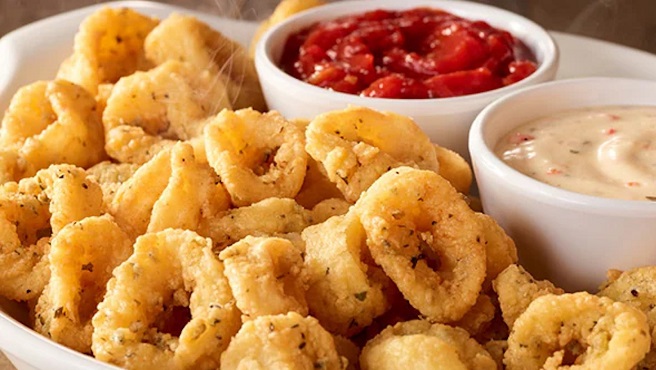
Few appetizers at Olive Garden generate as much excitement as the Calamari. Golden, crispy, and served alongside two very different dipping sauces, it’s one of the most popular starters on the menu—and for good reason. But if you’re tracking your intake or managing dietary restrictions, knowing exactly what’s in your order matters.
This guide breaks down everything you need to know about Olive Garden’s Calamari: the ingredients, the full nutrition profile, the allergen information, and how the dipping sauces stack up. By the end, you’ll have a clear picture of what you’re eating and how this dish fits into your day.
What Is Olive Garden Calamari?
Olive Garden’s Calamari is a classic fried seafood appetizer made from wild-caught squid rings. Each piece is lightly breaded, seasoned with Italian herbs and spices, and fried to order for a consistently crispy exterior and a tender, juicy interior.
The dish comes with two dipping sauces: Olive Garden’s signature marinara—a tomato-based sauce with garlic, onion, and herbs—and a spicy ranch made with buttermilk, mayonnaise, and chili spices. The combination of mild seafood, savory breading, and contrasting sauces is a big part of why the Calamari works so well as a table starter.
It’s available for both dine-in and takeout, starting at $12.29 per order.
Olive Garden Calamari Ingredients
Understanding what goes into your food is useful whether you’re cooking at home, managing food allergies, or just curious. Here’s a closer look at each component of the dish:
Calamari Rings
The base of the dish is wild-caught squid, sliced into rings. Squid is naturally lean and high in protein, and on its own, it’s a fairly nutritious seafood choice. The way it’s prepared—battered and deep-fried—does change its nutritional profile considerably, which we’ll explore in more detail below.
Seasoned Breading
The squid rings are coated in a seasoned breading made from wheat flour, Italian herbs, salt, and spices. The breading creates the crispy outer shell that defines the dish’s texture. It also adds a significant portion of the carbohydrates found in the final product.
Frying Oil
The calamari is cooked in vegetable oil. Deep frying is what gives the breading its golden color and satisfying crunch, but it also contributes to the dish’s fat content. Vegetable oils used in restaurant frying are typically high in polyunsaturated and monounsaturated fats.
Marinara Sauce
Olive Garden’s marinara is a tomato-based dipping sauce made with tomatoes, olive oil, garlic, onion, and Italian herbs. It’s the lighter of the two sauce options at just 35 calories per serving, making it a reasonable choice if you’re being mindful of your intake.
Spicy Ranch Sauce
The spicy ranch is a creamy, tangy alternative made with buttermilk, mayonnaise, herbs, and chili spices. It adds a kick of heat that pairs well with the mild calamari, but it’s significantly more caloric than the marinara—coming in at 240 calories per serving.
Olive Garden Calamari Nutrition Facts
The following nutritional data is sourced from Olive Garden’s Official U.S. Nutrition Information and reflects one full appetizer order of calamari, without the dipping sauces.
|
Nutrient |
Per Order |
% Daily Value |
|---|---|---|
|
Calories |
670 kcal |
— |
|
Total Fat |
42 g |
65% |
|
Saturated Fat |
3.5 g |
18% |
|
Trans Fat |
0 g |
— |
|
Cholesterol |
300 mg |
100% |
|
Sodium |
1,600 mg |
70% |
|
Total Carbohydrates |
48 g |
16% |
|
Dietary Fiber |
2 g |
8% |
|
Sugars |
3 g |
— |
|
Protein |
24 g |
— |
% Daily Values are based on a 2,000-calorie diet.
At 670 calories, the calamari accounts for roughly a third of a standard 2,000-calorie daily intake before the dipping sauces are added. The fat content is notable—42 grams represents 65% of the recommended daily value—most of which comes from the frying oil rather than the squid itself.
The protein content is a genuine highlight. At 24 grams per order, it provides a meaningful contribution toward daily protein goals, which is typical of squid as an ingredient. Squid is naturally a lean, protein-dense seafood; the preparation method amplifies the calorie and fat counts significantly.
Sodium is the other figure worth paying attention to. A single order contains 1,600 milligrams, which is 70% of the recommended daily limit of 2,300 milligrams. If you’re managing blood pressure or following a low-sodium diet, this is something to factor in before ordering.
Dipping Sauce Nutrition Breakdown
Your sauce choice has a bigger impact on the meal’s total nutrition than you might expect. The marinara and spicy ranch are quite different from each other, both in flavor and in calories.
|
Sauce |
Calories |
Total Fat (g) |
Sodium (mg) |
|---|---|---|---|
|
Marinara Sauce |
35 |
2 |
320 |
|
Spicy Ranch Sauce |
240 |
26 |
740 |
If you use both sauces as served, the total calorie count for the entire dish jumps to 945 calories—a meaningful increase from the 670 base. The spicy ranch alone adds 240 calories and 26 grams of fat, bringing the cumulative fat total for the dish to 68 grams if consumed in full.
For a lighter experience, sticking primarily with the marinara sauce is the smarter choice. It adds just 35 calories, 2 grams of fat, and 320 milligrams of sodium—a minor addition compared to the ranch.
Allergen Information
Olive Garden’s Calamari contains several common allergens. This is important to review before ordering if you or someone at your table has food sensitivities or allergies.
The dish contains:
- Wheat (gluten) — present in the seasoned breading
- Milk — found in the spicy ranch dipping sauce
- Egg — part of the breading and sauce components
- Soy — present in the dish
- Fish (calamari/squid) — the primary ingredient
It’s also worth noting that the dish is prepared in a shared kitchen environment, where cross-contact with shellfish and other allergens is possible. Anyone with a shellfish allergy should be especially cautious, as cross-contamination cannot be guaranteed.
If you have a dairy allergy or are lactose intolerant, note that the spicy ranch sauce contains buttermilk. Skipping the ranch entirely and opting for marinara only will eliminate the milk component from your order.
How the Calamari Fits into a Balanced Diet
The calamari is an indulgent appetizer—there’s no way around that. With 670 calories as a starter, it’s a significant portion of the day’s energy before the main course arrives. That said, context matters, and one dish doesn’t define a meal or a diet.
Here are a few things to consider when deciding how to approach the dish:
It’s high in protein. Twenty-four grams of protein from an appetizer is genuinely substantial. Protein supports muscle repair, satiety, and a range of bodily functions. If you’re sharing the calamari across the table rather than eating the full order yourself, the caloric load per person drops considerably.
The cholesterol is significant. At 300 milligrams—100% of the recommended daily value—the cholesterol content is the most striking number on the label. Much of this comes from the squid itself, which is naturally high in dietary cholesterol. For most healthy adults, dietary cholesterol has less impact on blood cholesterol than saturated or trans fats, but those managing cardiovascular health should keep this in mind.
Sodium adds up quickly. Between the calamari (1,600 mg) and the spicy ranch (740 mg), a single appetizer course could put you close to or over the daily sodium limit. Pairing it with a lower-sodium entrée later in the meal is a practical way to balance things out.
Sharing helps. Olive Garden’s Calamari is designed as a shareable starter. Splitting it between two or three people halves or thirds the individual caloric and sodium impact, making it a much more manageable choice.
Ordering Smart at Olive Garden
A few simple strategies can help you enjoy the calamari without it derailing your nutritional goals for the day:
- Choose marinara over spicy ranch — or use both in moderation. The sauce choice alone can save you over 200 calories.
- Share the dish — splitting the appetizer between two people brings each person’s portion to around 335 calories from the calamari alone.
- Balance the rest of your meal — if you start with calamari, consider a lighter entrée or a lunch-sized portion to keep total calories in check.
- Watch the sodium — plan for a lower-sodium dinner if you’re mindful of your daily intake, since this appetizer alone covers a significant percentage of the daily recommended limit.
What You’re Really Ordering
The Olive Garden Calamari is a well-executed fried seafood appetizer with strong flavor, a satisfying texture, and a protein count that outperforms most starters on the menu. It comes in at 670 calories per order (before sauces), with 42 grams of fat, 24 grams of protein, and 1,600 milligrams of sodium. Add both dipping sauces, and the total rises to 945 calories.
For diners who enjoy it occasionally and make conscious choices about the rest of their meal, it’s a perfectly reasonable treat. For those managing specific dietary conditions—sodium sensitivity, high cholesterol, or food allergies—the nutritional details here give you the information you need to make the right call.
Next time you sit down at Olive Garden, you’ll know exactly what’s on the plate before it arrives.