
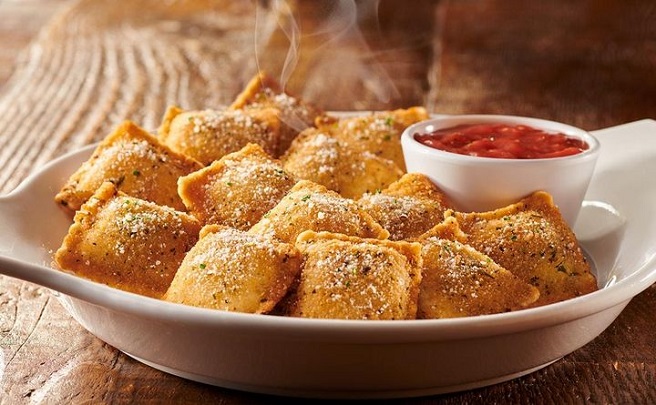
Olive Garden’s Toasted Ravioli is a lightly fried appetizer filled with seasoned beef and served with homemade marinara sauce. One full serving (310g) contains 650 calories, 31g of fat, 69g of carbohydrates, and 25g of protein. Including marinara, the total calorie count reaches 685 calories.
Crispy on the outside, savory on the inside, and served alongside a tangy marinara dipping sauce—Olive Garden’s Toasted Ravioli is one of the most recognizable appetizers in American casual dining. Priced at $10.29, it’s a straightforward but satisfying starter that has earned a permanent spot on the menu and a loyal following among guests.
The dish itself is deceptively simple: beef-filled pasta, breaded and fried until golden, then paired with homemade marinara. But for anyone tracking calories, managing dietary goals, or simply wanting to know exactly what they’re eating before they place their order, the details matter. Knowing the full nutrition profile—including fat content, sodium levels, and protein—gives you a clearer picture of how this appetizer fits within your overall dietary intake.
This guide covers everything you need to know about the Olive Garden Toasted Ravioli, from its ingredients and allergen information to a complete nutritional breakdown backed by Olive Garden’s official U.S. nutrition data.
A Brief History of Toasted Ravioli
Before diving into the numbers, it’s worth understanding where this dish actually comes from—because its origins are more interesting than most people realize.
Toasted ravioli, locally known in St. Louis as “T-ravs,” did not begin as a deliberate creation. According to Wikipedia and multiple food historians, most accounts trace the dish to The Hill, a predominantly Italian-American neighborhood in St. Louis, Missouri, in the early 1940s. The most widely cited story credits a chef named Mario Battocletti at a restaurant then known as Angelo’s (later Charlie Gitto’s “On The Hill”) with accidentally dropping a piece of ravioli into hot frying oil. The result was too good to ignore, and the item quickly began appearing on menus across the neighborhood.
Even the name has an interesting backstory. According to food writer and Missouri historian Patti Delano, restaurateur Louis Oldani chose the word “toasted” over “fried” simply because it sounded more appealing to customers. The branding stuck—and the dish eventually made its way from the Italian-American restaurants of St. Louis to national chains like Olive Garden, where it now serves as a signature appetizer enjoyed across the country.
What Is Olive Garden’s Toasted Ravioli Made Of?
Olive Garden’s Toasted Ravioli keeps its ingredient list grounded and approachable. The dish centers on pasta pockets filled with seasoned beef and Italian herbs, coated in a breadcrumb crust, and fried in vegetable oil until they develop a golden, crispy exterior. The result is a textural contrast between the crunchy outer shell and the tender, savory filling inside.
The accompanying marinara sauce is made in-house and brings the full dish together. It follows a classic Italian-American formula: ripe tomatoes, olive oil, garlic, onion, fresh basil, and oregano. Some locations may finish the dish with a light dusting of Parmesan cheese and fresh parsley as garnish, though these are considered optional.
Here is a summary of the core ingredients:
- Ravioli pasta stuffed with seasoned beef and Italian herbs
- Breadcrumb coating for a crispy, golden exterior
- Vegetable oil used for frying
- Marinara sauce made with tomatoes, olive oil, garlic, onion, basil, and oregano
- Parmesan cheese and fresh parsley as optional garnish
The combination of seasoned beef, herbed pasta, and tangy tomato sauce creates a flavor profile that is rich and savory without being overly complex—which is a large part of why it works so well as a shared appetizer.
Allergen Information
Olive Garden’s Toasted Ravioli contains the following allergens:
- Wheat (gluten) — present in the pasta and breadcrumb coating
- Milk — present in the cheese and potential dairy-based components
- Egg — used in the pasta dough and breading process
- Soy — present in the vegetable oil used for frying
Olive Garden prepares this dish in a shared kitchen environment, which means cross-contact with other allergens is possible. Anyone with severe food allergies should consult with a server or the restaurant directly before ordering.
Full Nutrition Facts for Olive Garden Toasted Ravioli
The nutrition data below is sourced directly from Olive Garden’s official U.S. Nutrition Information Report. One serving equals one full menu item, with a serving weight of 310g. These figures reflect the toasted ravioli alone, without the accompanying marinara sauce.
|
Nutrient |
Amount Per Serving |
% Daily Value |
|---|---|---|
|
Calories |
650 kcal |
32% |
|
Total Fat |
31g |
40% |
|
Saturated Fat |
10g |
50% |
|
Trans Fat |
0g |
— |
|
Cholesterol |
45mg |
15% |
|
Sodium |
1,330mg |
55% |
|
Total Carbohydrate |
69g |
25% |
|
Dietary Fiber |
4g |
14% |
|
Total Sugars |
5g |
10% |
|
Protein |
25g |
50% |
% Daily Values are based on a 2,000-calorie daily diet. Source: Olive Garden’s Official U.S. Nutrition Information.
A few figures stand out immediately. The sodium content—at 1,330mg per serving—accounts for 55% of the recommended daily intake for most adults, which is a notable consideration for those monitoring cardiovascular health or managing hypertension. The saturated fat content at 10g (50% DV) is similarly worth noting for anyone following a heart-conscious diet.
On a more positive note, the dish delivers 25g of protein per serving, which is a meaningful contribution to daily protein goals. The 4g of dietary fiber is modest but present, coming primarily from the pasta and tomato-based ingredients.
Calorie composition breaks down as follows: approximately 43% of calories come from fat, 42% from carbohydrates, and 15% from protein.
Marinara Sauce: Nutrition Breakdown and Combined Totals
The homemade marinara sauce served alongside the toasted ravioli adds relatively few calories on its own, but its sodium content is worth factoring in if you plan to include it as part of your nutritional count.
|
Component |
Calories |
Total Fat |
Sodium |
|---|---|---|---|
|
Toasted Ravioli (alone) |
650 kcal |
31g |
1,330mg |
|
Marinara Sauce (side) |
35 kcal |
2g |
320mg |
|
Combined Total |
685 kcal |
33g |
1,650mg |
The marinara sauce adds 35 calories and 320mg of sodium to the total. Combined with the ravioli itself, a full serving with sauce brings the meal to 685 calories and 1,650mg of sodium—representing approximately 72% of the average adult’s recommended daily sodium intake in a single appetizer course.
This does not disqualify the dish from a balanced diet, but it is useful context for those who plan to follow the appetizer with an entrée or additional courses.
How Does Olive Garden’s Toasted Ravioli Fit Into Your Diet?
Understanding where a dish lands nutritionally helps set realistic expectations—especially when dining out, where portion sizes and preparation methods can be harder to control.
At 685 calories for the full serving (including sauce), Olive Garden’s Toasted Ravioli represents approximately one-third of a typical 2,000-calorie daily intake. As a shared appetizer split among two or more people, the caloric load per person becomes considerably more manageable.
For those focused on protein intake: The dish offers 25g of protein from the seasoned beef filling—a relatively strong return for an appetizer of this size. Splitting the dish with one other person still provides roughly 12–13g of protein each.
For those managing sodium levels: The combined sodium total of 1,650mg is high for a single course. Pairing this appetizer with lower-sodium entrées and limiting additional salt at the table would be the most straightforward way to balance the meal.
For those counting carbohydrates: At 69g of total carbs, this dish represents a substantial carbohydrate load. The majority comes from the pasta and breadcrumb coating, with only 4g of dietary fiber to offset it.
For those with allergen concerns: Given the presence of wheat, milk, egg, and soy, this dish is not suitable for those with celiac disease, lactose intolerance, egg allergies, or soy sensitivities. Olive Garden’s kitchen environment also means cross-contamination cannot be entirely ruled out.
If you’re looking for a lighter alternative among Olive Garden’s appetizer options, the Stuffed Ziti Fritta at 500 calories (without sauce) offers a somewhat lower calorie count, though it carries its own macronutrient profile worth reviewing.
The Bottom Line on Olive Garden’s Toasted Ravioli
Olive Garden’s Toasted Ravioli is a well-executed version of a dish with genuine historical roots. From its accidental invention on The Hill in 1940s St. Louis to its place as a staple on one of America’s most popular casual dining menus, the dish has stood the test of time for good reason. The combination of crispy breaded pasta, savory beef filling, and house-made marinara delivers a reliable and satisfying experience.
Nutritionally, it is a calorie-dense, high-sodium appetizer—one best enjoyed mindfully as part of a broader meal plan rather than a daily indulgence. With 25g of protein and a flavor profile that lends itself well to sharing, it can fit comfortably into an occasional restaurant meal without derailing dietary goals.
If you’re visiting Olive Garden and considering the Toasted Ravioli, armed with the full nutritional picture, you can make an informed choice about how it fits into your day.