Each Olive Garden breadstick contains 140 calories, 25g of carbohydrates, 4g of protein, 2.5g of fat, and 460mg of sodium. They’re made from enriched wheat flour, yeast, garlic-butter spread, salt, sugar, water, and olive oil — and they’re vegetarian-friendly but not vegan.
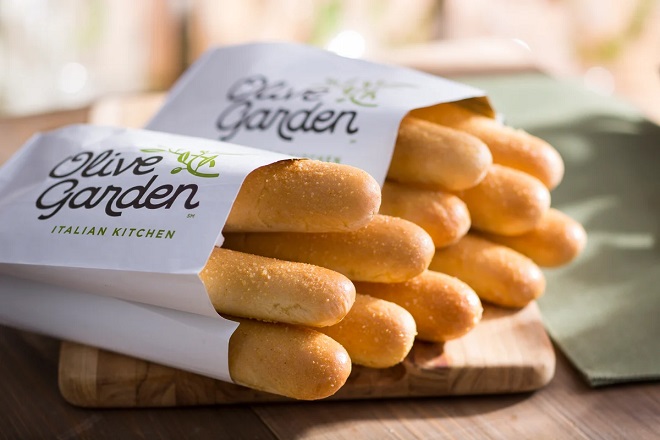
There’s something almost Pavlovian about the sight of a bread basket hitting the table at Olive Garden. Before your soup arrives, before you’ve even looked at the menu, those golden, garlic-kissed breadsticks are calling your name. And honestly? You’re probably going to eat more than one.
Americans collectively eat somewhere between 500 and 600 million Olive Garden breadsticks every year. That’s not a typo. Half a billion breadsticks, give or take, consumed annually — and most of us don’t think twice about it. We’re too busy reaching for the next one.
But if you’ve ever pushed back from the table and wondered what exactly you just ate, this post is for you. Whether you’re tracking your calories, managing dietary restrictions, or just plain curious about what goes into one of the most famous breadsticks in American dining, we’ve got everything you need to know — calories, ingredients, allergens, and a few fun facts thrown in for good measure.
What’s Actually Inside an Olive Garden Breadstick?
Before we get into the numbers, let’s talk ingredients. Olive Garden breadsticks aren’t made from some secret 100-step Italian recipe passed down through generations. They’re actually pretty simple, which is part of why they work so well.
Here’s what goes into each breadstick, sourced from Olive Garden’s U.S. nutrition information:
- Enriched wheat flour (flour, niacin, iron, thiamine mononitrate, riboflavin, folic acid)
- Yeast
- Garlic-butter spread
- Salt
- Sugar
- Water
- Olive oil
That’s it. Nothing wild, nothing you can’t pronounce. The enriched wheat flour forms the soft, chewy base, while yeast gives each breadstick its slight rise and airy texture. The garlic-butter spread — the stuff that makes these things so addictive — is brushed on after baking, along with a hit of salt.
One thing worth knowing: despite the name “garlic-butter spread,” Olive Garden has officially stated that there is no dairy in their breadsticks or in the breadstick topping. The coating is made with a margarine-based spread rather than traditional butter. More on what that means for your diet in a bit.
It’s also worth noting that while the breadsticks arrive at each restaurant parbaked from regional suppliers (they’re not made from scratch on-site), they’re finished in-store, which is why they always arrive warm and fresh.
Olive Garden Breadstick Nutrition Facts
Okay, here’s the part you’re probably most curious about. One Olive Garden breadstick with its signature garlic topping clocks in at 140 calories. That sounds relatively modest — until you realize how easy it is to eat three or four before your entrée even shows up.
|
Nutrient |
Per 1 Breadstick |
% Daily Value |
|---|---|---|
|
Calories |
140 kcal |
7% |
|
Total Fat |
2.5g |
3% |
|
Saturated Fat |
0.5g |
2% |
|
Trans Fat |
0g |
— |
|
Cholesterol |
0mg |
0% |
|
Sodium |
460mg |
20% |
|
Total Carbohydrates |
25g |
9% |
|
Dietary Fiber |
1g |
4% |
|
Total Sugars |
1g |
— |
|
Protein |
4g |
8% |
Source: Olive Garden’s official U.S. Nutrition Information. % Daily Values based on a 2,000-calorie diet.
Looking at the macronutrient breakdown, Olive Garden breadsticks are predominantly carb-driven — about 71% of the calories come from carbs, 17% from fat, and 12% from protein. That tracks with what you’d expect from a white bread product.
The fat content is actually pretty low at 2.5g per breadstick, and there’s zero cholesterol. The main thing to keep an eye on is the sodium — at 460mg per breadstick, that’s 20% of the recommended daily value in a single piece of bread. If you’re watching your salt intake, that number adds up fast.
What Happens When You Eat More Than One?
Let’s be honest: the breadstick limit at Olive Garden is basically unlimited (servers typically bring one more than the number of guests in the first basket, then one per person for refills — but you can always ask for more). So what does it look like nutritionally when you eat two, three, or four?
|
Number of Breadsticks |
Calories |
Sodium |
Total Carbs |
Total Fat |
|---|---|---|---|---|
|
1 breadstick |
140 kcal |
460mg |
25g |
2.5g |
|
2 breadsticks |
280 kcal |
920mg |
50g |
5g |
|
3 breadsticks |
420 kcal |
1,380mg |
75g |
7.5g |
|
4 breadsticks |
560 kcal |
1,840mg |
100g |
10g |
Three breadsticks puts you at 420 calories and a whopping 1,380mg of sodium — before you’ve even touched your pasta. For context, the American Heart Association recommends no more than 2,300mg of sodium per day for most adults. Four breadsticks alone gets you 80% of the way there.
This doesn’t mean you need to swear off breadsticks forever. It just helps to go in with your eyes open.
Let’s Talk About the Garlic Topping
The garlic topping is really what makes these things iconic. It’s a garlic-butter spread applied right after baking, and it’s the reason the breadsticks have that slightly shiny, salty, savory crust that pairs so well with marinara or Alfredo sauce.
The topping adds most of the fat and sodium you see in the nutrition table above. Without it, you’d be looking at a much plainer, lower-sodium product. But then again, a plain breadstick isn’t really an Olive Garden breadstick, is it?
Salt is added on top of the garlic spread as well, which contributes to that extra punch of flavor — and the high sodium count. If you’re sodium-sensitive, this is the most important factor to keep in mind when enjoying these at the table.
Allergens and Dietary Considerations
If you’ve got dietary restrictions, here’s what you need to know before reaching into that bread basket.
Allergens present in Olive Garden breadsticks:
- Wheat (gluten) — the enriched flour base means these are absolutely not gluten-free
- Soy — present in the garlic-butter spread
- Possible cross-contact — breadsticks are prepared in shared kitchen environments where other allergens may be present
What about dairy? This one surprises a lot of people. Olive Garden officially confirms that their breadsticks and breadstick topping do not contain dairy. The spread used is margarine-based, not butter-based. This makes the breadsticks a solid option for those avoiding dairy.
Are Olive Garden breadsticks vegetarian? Yes. Olive Garden lists breadsticks as vegetarian (V) on their menu. There are no meat or meat-derived ingredients.
Are they vegan? This one gets a little murky. While there’s no dairy and no meat, Olive Garden stops short of labeling them as vegan. If you follow a strict vegan diet, it’s worth checking directly with Olive Garden for the most current ingredient information, as formulations can change.
Gluten-free? No. The enriched wheat flour makes these entirely off-limits for anyone with celiac disease or a gluten intolerance.
A Few Wild Facts About Olive Garden Breadsticks
You didn’t think we’d get through this whole post without the fun stuff, did you?
They keep thousands on hand at all times. Each Olive Garden location reportedly keeps more than 6,000 breadsticks in the back at any given time. According to Reddit users who work (or have worked) at Olive Garden, some locations order up to 25,000 breadsticks per week. One former employee described a tower of breadstick boxes collapsing on them in the back room. That’s dedication to the craft.
Americans eat hundreds of millions of them every year. Between 500 and 600 million Olive Garden breadsticks are consumed annually across the U.S. That’s roughly 1.5 to 2 breadsticks for every single American per year — babies and toddlers included.
Someone once ate 50 in a single sitting. According to Olive Garden employees on Reddit, one customer reportedly ate 50 breadsticks during a single visit. A YouTuber managed 31. A Yale men’s soccer player ate 17. The official Olive Garden stance is that there are no cut-offs. Though if you’re secretly packing them into your bag to take home, you will be asked to stop.
The unlimited policy almost ended in 2014. Olive Garden’s parent company put together a 300-slide presentation that included a push to limit unlimited breadsticks. The fans (and probably more than a few Olive Garden executives) said absolutely not, and the breadstick spigot remained open. For now, at least.
How Do Olive Garden Breadsticks Fit Into a Balanced Diet?
Here’s the honest take: Olive Garden breadsticks aren’t a health food. They’re a refined carb product with moderate calories but high sodium, and they’re designed to be eaten multiple times at one sitting. That’s part of their genius as a restaurant item — and part of why you need to be a little intentional about how many you have.
That said, one or two breadsticks isn’t going to derail anyone’s diet. At 140 calories and 2.5g of fat per breadstick, the calorie load is reasonable. The sodium is the bigger concern — especially if the rest of your Olive Garden meal is also sodium-heavy (and most of it is; many entrées contain well over 1,000mg of sodium on their own).
A few ways to enjoy them without going overboard:
- Stick to one or two as an appetizer, rather than treating them as a free-for-all before a calorie-dense pasta dish
- Skip the marinara dip if you’re already watching sodium — it adds more
- Drink water with your meal instead of a high-calorie beverage to offset some of the extra calories from the breadsticks
- Pair with a lighter entrée like grilled salmon or the minestrone soup to keep your overall meal balanced
None of this is groundbreaking nutrition advice. But a little awareness goes a long way when you’re sitting across from a basket of unlimited carbs.
The Bottom Line on Olive Garden Breadsticks
Olive Garden breadsticks are simple, satisfying, and wildly popular for a reason. With a short ingredient list — enriched wheat flour, yeast, garlic-butter spread, salt, sugar, water, and olive oil — there’s nothing mysterious going on. Per breadstick, you’re looking at 140 calories, 25g of carbs, 4g of protein, and 460mg of sodium.
The sodium is the number to watch, especially if you’re planning on eating multiple breadsticks before a full Italian dinner. They’re vegetarian-friendly, free from dairy (according to Olive Garden), and contain wheat and soy as primary allergens.
Enjoy them for what they are: one of the most comforting, feel-good restaurant staples in American dining. Just maybe count how many you’ve eaten before the entrée arrives.